

Crisis Action Team Prioritizes Mental Health Care in Overland Park, KS

A person in distress walked onto a busy pickleball court midgame, struggling to communicate. Dozens of spectators watched as the person managed only a few words: “The ones in the brown pants.”
Bystanders called 911. Dispatchers knew immediately that the person was asking for the Overland Park Crisis Action Team (OPCAT), whose members often wear brown pants. Officers arrived, and the individual was taken to get help.
Another time, someone in crisis simply said they needed “the maroons,” referring to the color of OPCAT officers’ uniforms.
This kind of recognition doesn’t happen by accident. It’s the result of years of work changing how city agencies respond to mental health crises in Overland Park.
In This Article
Reimagining Responses
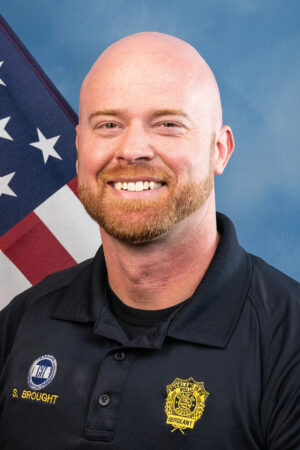
Sgt. Stewart Brought
Team Leader
OPCAT
“Our greatest successes are the crisis situations we de-escalate before they require police intervention or even become a full-blown crisis.”
OPCAT doesn’t look like law enforcement, and that’s intentional.
Officers wear nontraditional uniforms, drive unmarked vehicles and work alongside licensed master’s-level social workers from the Johnson County Mental Health Center.
“All decisions aim to provide a trauma-informed response, ensuring appropriate personnel is dispatched to the right crisis at the right time,” says Sgt. Stewart Brought, team leader.
This allows officers to fully focus on individuals in distress. Each morning, OPCAT’s co-responders review the previous day’s reports, proactively following up with people who’ve had recent police contact.
“Our greatest successes are the crisis situations we de-escalate before they require police intervention or even become a full-blown crisis,” Brought says.
“The most significant, yet often unknown, success is when we provide resources individuals utilize, preventing a crisis entirely.”
This proactive approach has changed public behavior.
“Residents who have previously interacted with OPCAT now specifically request us in times of crisis,” Brought says.
Building the System
OPCAT didn’t emerge in isolation. It’s part of a broader mental health strategy Overland Park has been building for years.
The city’s Mental Health Advisory Committee, created from recommendations of an earlier task force, unites professionals from schools, health care, government agencies and community organizations. The committee helped establish a behavioral health specialist position in municipal court and supported the First Responder Awareness Program, which provides specialized training for police, fire and EMS.
“We have a strong partnership with the Johnson County Mental Health Center,” says Bryan Dehner, assistant city manager.
City-funded clinicians from the center are embedded within both the police department and municipal court. The city tracks outcomes, such as repeat crisis calls, recidivism rates, emergency room visits, and reports of suicide and self-harm.
“Ensuring the continuum of care is available is a top concern, especially within our criminal justice system,” Dehner says.
The municipal court’s Mental Health Diversion Program aims to break the cycle of reoffending for individuals with mental illness.
Helping Youth
For children and teens in crisis, The University of Kansas Health System’s Marillac Campus provides the next link in that continuum. The facility offers a 60-bed inpatient unit, outpatient services and the Intensive Outpatient Program, with psychiatric assessments available year-round 24 hours a day.
“Many families face the challenge of simply not knowing the Marillac Campus is available for their child’s behavioral health needs,” says Dr. Mitchell Douglass, psychiatrist and campus director.
About half of patients are admitted through walk-in, on-site evaluations.
The need is urgent: Suicide is one of the leading causes of death among adolescents, fundamentally changing how providers approach youth mental health care.
Marillac’s Insights Unit is one of few in the region devoted to adolescents with depression and suicidal ideation.
“Our goal is to provide focused, therapeutic care that helps reduce this tragic outcome,” Douglass says. Every patient is seen daily by both a board-certified child psychiatrist and therapist, and families receive daily updates. A dedicated pediatric team addresses physical health needs alongside mental health treatment.

Breaking the Stigma
Perhaps the hardest work isn’t clinical, Brought says, it’s cultural. “We often encounter a sentiment: ‘That’s great for someone else, but not for me or my family. We’re good.’“
When OPCAT first offered naloxone, an opioid antagonist, to residents through a Kansas Fights Addiction grant, many were reluctant. Brought watched people glance around to see who might notice them accepting it. After repackaging the medication and talking openly about its lifesaving potential, the numbers transformed. Events that once distributed a handful now regularly give away 100 to 150 units.
“Over the last five to seven years, the City of Overland Park has invested significantly in the community’s mental health,” Dehner says.
The police department created a behavioral health unit and victim advocacy team. The municipal court added a behavioral health specialist. Plus, the city provides mental health services for first responders on staff. Supporting mental health has become as fundamental as any other city service and just as essential.
Get to Know Overland Park
Want to learn more about living and working in Overland Park, KS? Check out the new edition of Livability Overland Park, Kansas.