
Health Care Education in Dayton Region Creates Bright Futures
While the Dayton region is known as the home of American aviation pioneers the Wright brothers, it is also recognized for having an outstanding array of higher educational offerings for individuals who are charting their course for an outstanding health care career. Learn from three students studying in various medical fields how health care education in Dayton and the surrounding communities has put them on a flight to success and bright futures ahead.
Dr. Danielle Bornhorst
Wright State University Boonshoft School of Medicine
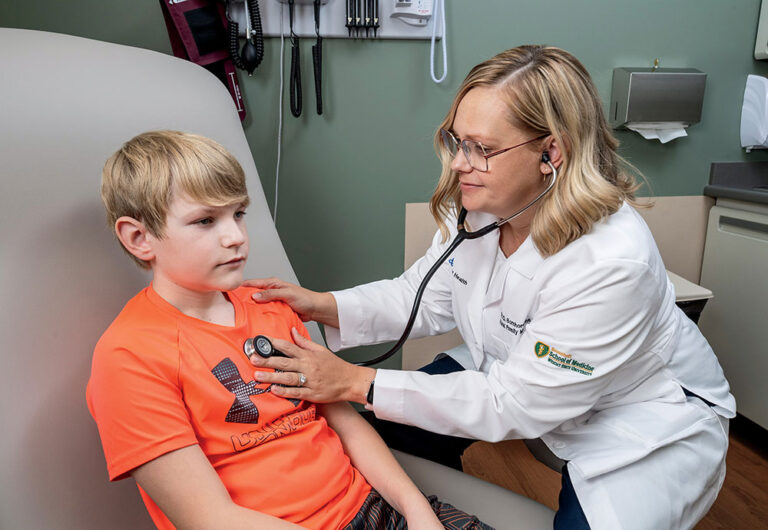
Danielle Bornhorst smiles about her 10-year, winding journey that led to Wright State University Boonshoft School of Medicine and the fulfillment of her childhood dream to be a doctor.
Bornhorst grew up about an hour north of Dayton, in rural St. Henry, and attended the University of Cincinnati. After graduating with a bachelor’s degree in biomedical engineering, she was not accepted to medical school. Discouraged, but determined, during the following decade she earned a master’s in teaching from American University in Washington, D.C., taught in the nation’s capital, got married, had a baby and went back to her hometown.
“I knew something was missing and wondered if I might be crazy at my age to apply again to medical school,” she says.
This time around, the nontraditional student received multiple acceptance letters and turned down a full scholarship to attend Wright State University Boonshoft School of Medicine, her first choice. Now, with two more babies and a medical degree, she has started a rural family medicine residency there and plans to return home to be a family practitioner.
“I can’t say enough good things about the school. They offer a quality education needed to be successful,” she says. “I was able to get one of the two three-year accelerated programs offered in either family medicine or pediatrics.
1st. Lt. Andrew Cornn
Wright-Patterson Medical Center
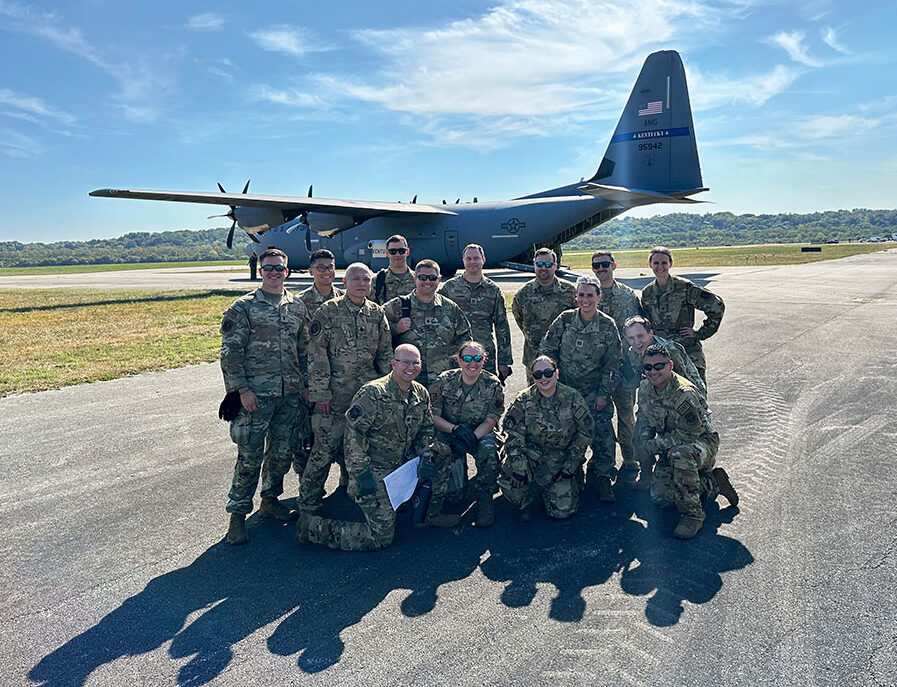
Nursing runs deep in the genes of Lt. Andrew Cornn, a first lieutenant in the Air Force.
“That comes from my mom, Gladys Cornn, who is a nurse in Eastern Kentucky, and so was my late father,” says Cornn, a member of the 88th Medical Group and critical care nurse at Wright-Patterson Medical Center located at the Wright-Patterson Air Force Base.
Cornn holds bachelor’s degrees in nursing and biology from the University of the Cumberlands in Williamsburg, Kentucky. Before joining the Air Force, he was a cardiovascular ICU nurse at the University of Kentucky Hospital in Lexington.
He recently completed Critical Care Air Transport Team (CCATT) training at the base’s USAF School of Aerospace Medicine, a premier institute for providing in-depth education in aerospace and operational medicine.
CCATT’s mission is to provide vital aeromedical evacuation through a highly specialized three-person medical team that establishes and operates an in-flight intensive care unit.
“The CCATT training helps me provide the best possible care for current patients, but be ready to be deployed,” he says. “I think the biggest skill you learn is the team dynamic, and you are prepared second to none.” I’m excited about the future.”
Andrew Salerno
Sinclair Community College
Growing up with asthma greatly influenced Andrew Salerno’s decision to pursue a career as a respiratory therapist.

Andrew Solerno
“I experienced a lot of asthma attacks growing up and a couple of ambulance rides,” says the 21-year-old Dayton-area native. “I personally understand how an individual’s life can be affected when their airways are impacted.”
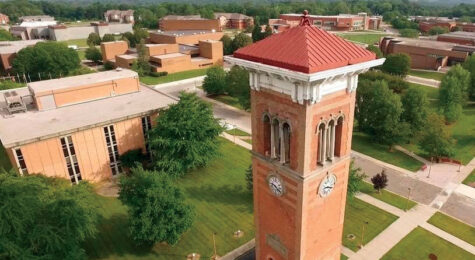
Salerno is studying for an associate of applied science degree in respiratory care from Sinclair Community College, recognized for graduating some of the best health care workers in Southern Ohio in more than 50 related fields.
Previously, he completed a basic emergency medical technician certification in an accelerated program offered by the college and works for Kettering Health as an EMT doing ambulance transport.
“The instructors at Sinclair are knowledgeable and encouraging,” he says. “Students get a lot more clinical, hands-on time compared to other programs in the area. You graduate with more experience. The school has high-tech equipment, and it is affordable.”
Following graduation, he has his eye on working in an emergency room or critical care setting and “having a good-paying job that helps others and provides a future.”
Get to Know Dayton, OH
Want to learn more about living and working in the Dayton region? Check out the new edition of Livability Dayton, Ohio.