
Pueblo’s Craft Beer Legacy Lives on Through Historic and Modern Breweries
Craft beer may seem like a 21st-century fad, but Coloradans have long loved their brews. Before Prohibition, the state boasted 44 breweries, with Pueblo playing a major part in the state’s beer history. Today, whether sipping a beer that was born during the first golden age of Pueblo brewing or a thoroughly modern pint from a Riverwalk destination, the city’s craft beer fans are truly tasting history.
Enduring Tradition
Walter Brewing Co. in Pueblo was launched in 1898 by Martin Walter, a German immigrant who’d originally settled in Wisconsin, where he and his brothers established four breweries under the family name. Martin eventually made his way to Colorado, opening the Steel City outpost as well as one in Trinidad, Colorado.
At the time, says Mia Sanchez, current co-owner and operations manager of Walter, “there were so many breweries in the state, and Walter and Coors were pretty similar brands.”
The westernmost Walter brewhouse grew rapidly, thanks to thirsty local steelworkers as well as distribution in 21 states across the U.S. Sanchez keeps a shadow box of historic Walter beer labels in her home, bearing names such as Sheridan Beer and Gold Label that were sold from California to Louisiana.
By 1912, Walter Brewing installed electricity and a 250-barrel brew kettle – impressive for the time. But in 1916, Prohibition descended upon Colorado, soon to be followed by national teetotaling in 1920, and Walter Brewing shuttered its doors.
Co.
The company was one of just four Colorado breweries to outlast those dry days, reopening in 1933 and operating with various levels of success until 1975, when the Walter family sold the operation and it closed for good. But in the early 2000s, Mia’s husband, Andrew Sanchez, envisioned resurrecting the Walter brand.
“He thought, ‘Wouldn’t it be cool to revive Walter because it has such a deep history?” Mia Sanchez says. “If you come to the brewery and sit with customers, probably 80% have a personal history with the brand. Their grandpa used to work there, their dad drank nothing but Walter’s, their mom was a secretary there, their first drink at 13 was sneaking Walter’s out of their parents’ liquor cabinet.”
After nearly a decade spent tracking down the Wisconsin Walters for their blessing and working with the City of Pueblo, Walter Brewing Co. reopened in 2013, making a mix of original and modern recipes. Its pre-Prohibition Original Pilsener shares tap handles with green chile lager and hard seltzer.
Brues Alehouse Rises
The modern Brues Alehouse was the brainchild of Tony Garcia, who wanted to create a place in his hometown that combined traditional, well-made beer with great food and live music. He wanted not just to open a brewery, but a gathering place.
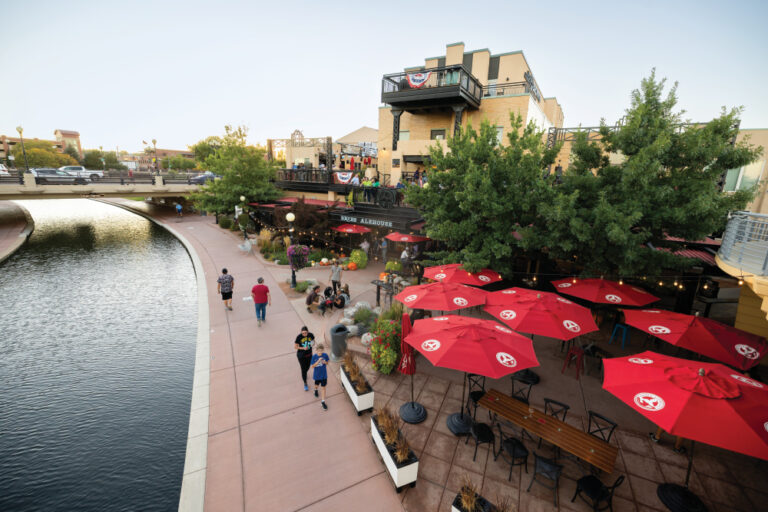
The result: Brues Alehouse, which welcomed its first customers in 2015 into a sprawling Riverwalk space Garcia describes as a “little city,” with a bar, music venue, dining room, brewery, patios, beer garden and bakery.
Even the brand-new brewery concept tapped into Pueblo history, with founder and brewer Garcia taking over a former police station and jail for the project.
“It had a lot of character but was rough when we took it over,” he says of the space.
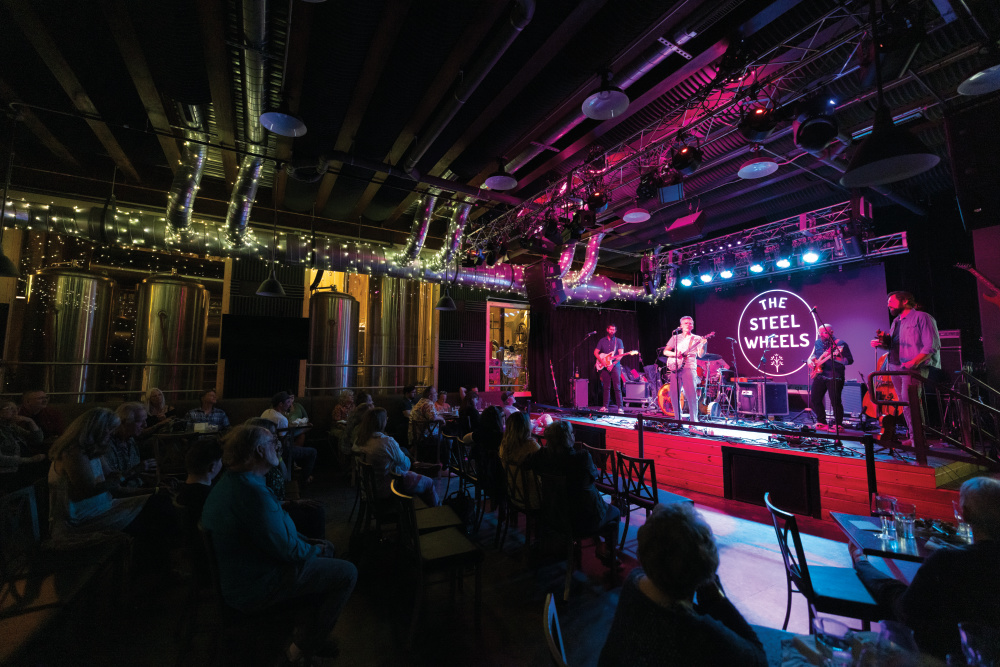
A two-year renovation gutted the interior; replaced plumbing, electrical and HVAC systems; installed a stage and kitchen; and added a brewery, dining room and 7,000 square feet of new construction.
Now, says Garcia, the bar area is intimate and retains the character of the old building.
“Our music venue, which is also used for dining, is industrial modern and has a nice view of the brewery. We also have a vast amount of outdoor space including our multiple lower patio spaces, and our upper beer garden,” he says.
To do justice to the impressive space, Garcia keeps the beers “German-inspired,” though he says that doesn’t mean making only German styles. Instead, it’s about traditional techniques, clean fermentation and balance, he says, and “more about discipline and quality than strict categories.”
In fact, Brues Especial, a Mexican lager, is its best seller. The upscale pub food mirrors that focus on quality, emphasizing scratch cooking across its accessible menu that includes crowd-pleasers like Brues’ popular burgers.
“Brues has evolved a lot since opening,” Garcia says. “We’ve refined our beer, improved our food program and have really leaned into our events. It’s become more than just a brewery – it’s a place people associate with shows, food and community, which is exactly what we hoped for.”
Get to know Pueblo, CO
Want to learn more about living and working in Pueblo, CO? Check out the new edition of Livability Pueblo, Colorado.