
Eastern Idaho Agricultural Products: A Win-win for Everyone
Eastern Idaho agricultural products play an important role for the residents and business owners in this beautiful region.
Andrew Boczar likes to say his brother, John, “makes a huge batch of mashed potatoes every day.” Their family owns the Grand Teton Distillery in Driggs. While Andrew’s main job is strategic planning, John is head distiller, and it’s his task to turn peeled, dehydrated and flaked russet potatoes into award-winning vodka.
“Think of them as very boring instant mashed potatoes,” Andrew says.
When distilling vodka, dull mashed is fine. What’s offensive is using poor potatoes as the base. “We’ve tried lower quality before, and they smell awful. It definitely matters having the higher quality potatoes to cook with,” Andrew says. “We have such amazing water, too. We use an on-site well.”
The water and, of course, world-famous Idaho potatoes are local. The Pacific Northwest huckleberries and cherries in Grand Teton’s infused potato vodka are fresh and raw.
“The fruit sits in stainless steel tanks for several weeks. The alcohol just pulls the flavor out,” Andrew says.
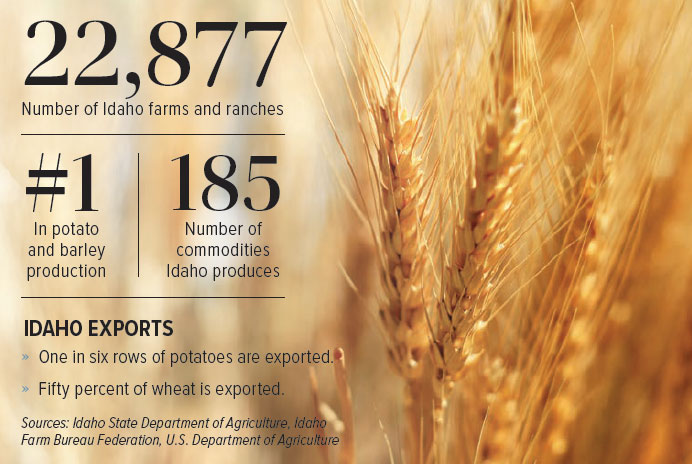
Grand Teton also makes whiskey using Idaho barley, another commodity that’s critical to the economy. The state ranks first in the U.S. in both barley and potato production.
Bountiful Eastern Idaho Agricultural Products
Barley production has a long history in Eastern Idaho. Founded in 1934, Pocatello’s Great Western Malting Co. is the oldest malting business in the Western U.S. The company distributes malts in North America, South America and Asia.
In nearby Idaho Falls, Mountain Malt is a much smaller family business that grows barley as well as rye, alfalfa and hemp. “We are one of the first farmers to malt our own barley in the U.S. since Prohibition ended,” says owner Jake Burtenshaw.
Grand Teton Distillery is a Mountain Malt customer, along with many other Idaho distilleries and breweries. By sourcing from a farmer, Burtenshaw explains, the end user knows where their product is coming from. Plus, the quality is top-notch.
“Eastern Idaho grows really good barley because we’re in a high mountain desert and have water,” he says.
Growing temperatures are ideal and technology is maximized using GPS and direct drilling, where seed is sowed into the previous year’s field residue.
“We don’t have to work the dirt in order to get a crop,” Burtenshaw says. “On the malt side, we use all modern equipment, so one person can actually run the entire malt house by themselves.”
Buying Idaho agricultural products is a win-win for everyone. “It helps the local economy, and it saves on shipping,” Boczar says. “We’re in Idaho, so using the potatoes and barley just makes sense.”
It helps preserve the state’s heritage, too. “Family farms are going away,” Burtenshaw says. “Without some sort of vertical integration, most family farms will not survive. That’s the main reason why Mountain Malt started. I wanted to keep the legacy of what my family built with all their hard work.”
Education, Careers & Opportunity
Embracing the Future of Farming in Eastern Idaho
Innovative partnerships revolutionize the region’s agriculture industry.
Farm-to-table Experience
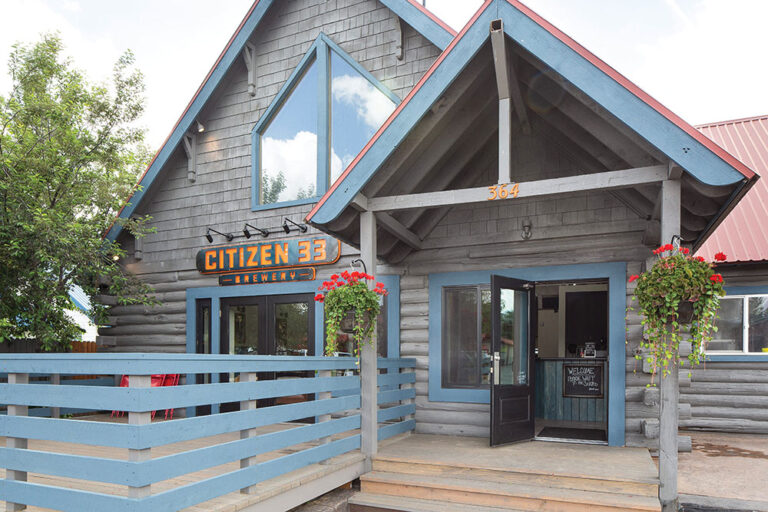
Back in Driggs and a mile south of Grand Teton Distillery is another family-run business. Citizen 33 Brewery also gets premium two-row malt barley from Mountain Malt as well as hops from its home state, which is why the owners like to say, “You are drinking Idaho in a glass!”
Chef Christian Hanley is one of Citizen 33’s founders.
“The quality of ingredients available to us is high,” he says. “Like most things in Idaho, the ingredients express an intensity derived from short, intense growing seasons forcing products, like the people, to be hardy and dependable.”
Besides craft beers, Hanley uses Idaho products in Citizen 33’s food, too, just as he does at his other Driggs restaurant, Forage Bistro & Lounge.
“Local sourcing has always been a part of our design,” he says. “At this point in time, locality is a standard that is expected by a large majority of the buying public.”
Even so, it doesn’t matter how superior the ingredients are if the end product isn’t great. “It’s still up to the chefs and brewers to impart their love and attention to those ingredients, helping express that sense of place,” Hanley says. “Luckily, we’re surrounded by talented custodians of food and beverage.”
Get to Know Eastern Idaho
Want to learn more about living and working in Idaho Falls and Eastern Idaho? Check out the latest edition of Livability Eastern Idaho.